
A common doubt surrounding adventure activities is, “What if I don’t know how to swim?” This becomes an even bigger concern when rafting enters the picture.
White water rafting, with its fast-moving currents and splashing rapids, can look intimidating at first glance. It’s completely normal for non-swimmers to wonder whether it’s safe to participate or if swimming is a must-have skill.
The good news is this: yes, white water rafting is safe for non-swimmers, as long as proper safety measures are followed and the activity is conducted under professional supervision.
In this guide, we’ll break down everything you need to know about safety, risks, precautions, and what non-swimmers can realistically expect, so you can decide with confidence.
Can Non-Swimmers Do White Water Rafting?
One of the most common concerns people have is whether they’ll even be allowed to participate without knowing how to swim.
In most professionally managed rafting setups, non-swimmers are absolutely allowed to take part. White water rafting is designed as a guided activity where safety systems are already in place to support participants of different skill levels.
You’re not expected to swim your way through the river. Instead, you stay securely inside the raft, follow instructions, and rely on protective gear and trained guides to ensure a safe experience.
Why non-swimmers can safely participate:
- Rafts are stable and designed for group safety
- Each participant is equipped with a high-quality life jacket
- Professional guides control navigation and give clear instructions
- Safety protocols are followed throughout the session
Is White Water Rafting Safe for Non-Swimmers?
Let’s address the core question directly: Is white water rafting safe for non-swimmers?
Yes, but the safety depends on certain key factors.
White water rafting is not a free-form activity. It is carefully structured with safety as the top priority. From pre-ride briefings to protective equipment and trained instructors, every step is designed to minimize risk.
Even in the unlikely event of falling into the water, a properly fitted life jacket will keep you afloat, giving guides enough time to assist you back into the raft.
That said, your safety also depends on how well you follow instructions and cooperate with your team.
Safety Measures That Protect Non-Swimmers
Understanding the safety systems in place can make a huge difference in building confidence.
Professional rafting providers follow strict protocols to ensure that even first-timers and non-swimmers can enjoy the experience without unnecessary risk.
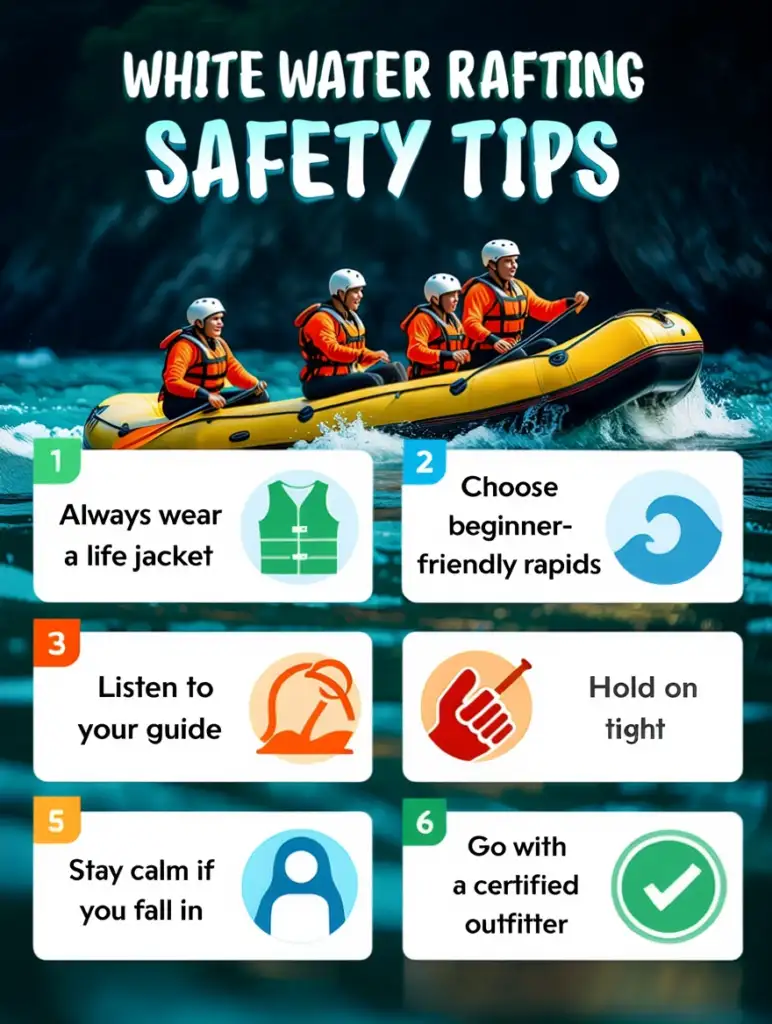
Key safety measures include:
- Life jackets (Personal Flotation Devices): Keep you afloat at all times
- Helmets: Protect your head from accidental impact
- Pre-rafting safety briefing: Teaches you what to do during different situations
- Experienced river guides: Lead and control the raft throughout the journey
- Rescue support: Backup teams and safety kayakers (in many setups)
These measures are what make white water rafting for beginners and non-swimmers a controlled and manageable activity.
What Happens If You Fall Into the Water?
This is usually the biggest fear for non-swimmers-and understandably so.
While falling out of the raft is not very common, it can happen in more dynamic rapids. However, this doesn’t mean you’ll be in danger.
With a life jacket on, your body will naturally stay afloat. Instead of trying to swim aggressively, you’ll be guided to float on your back, keep your feet up, and wait for assistance from the guide.
Most rafting briefings include this exact scenario, so you’ll already know what to do before you even start.
The key is to stay calm and trust the safety system.
Tips for Non-Swimmers Before Trying White Water Rafting
If you’re still unsure, a few simple precautions can make your experience much more comfortable.
Helpful tips for non-swimmers:
- Always choose a certified and experienced rafting provider
- Start with lower-grade rapids (Grade I–III)
- Listen carefully during the safety briefing
- Wear all safety gear properly, especially your life jacket
- Avoid panic, stay calm, and follow your guide’s instructions
These small steps go a long way in ensuring a safe and enjoyable experience.
Experience Safe Rafting with Kannur White Water Rafting
For those in Kerala, Kannur White Water Rafting offers a safe and well-managed environment for both swimmers and non-swimmers.
Located along the scenic Tejaswini River near Cherupuzha, the experience is designed to balance thrill with safety. The river features a mix of moderate currents and manageable rapids, making it suitable for beginners who want to try white water rafting in Kannur without feeling overwhelmed.
The sessions are conducted under trained supervision, with proper safety briefings and certified equipment provided to every participant. This ensures that even those with no swimming experience can take part with confidence.
Why it’s suitable for non-swimmers:
- Guided rafting sessions with trained professionals
- Controlled rapids suitable for beginners
- Mandatory use of certified safety gear
- Structured experience with a safety-first approach
It’s a great place to understand that white water rafting safety for non-swimmers is not just a claim, but something that’s actively practiced.
Common Myths About White Water Rafting for Non-Swimmers
Several misconceptions often stop people from trying rafting.
One of the biggest myths is that swimming is mandatory. In reality, rafting is more about teamwork and guidance than individual swimming ability.
Another common belief is that falling into the water is extremely dangerous. While it can feel scary, safety systems are designed specifically to handle such situations.
Understanding these myths helps remove unnecessary fear and gives a more realistic view of the activity.
Final Thoughts
So, is white water rafting safe for non-swimmers? The answer is yes, when done under the right conditions.
With proper equipment, trained guides, and a reliable rafting provider, even non-swimmers can safely enjoy this thrilling adventure. The key lies in preparation, awareness, and choosing the right location.
White water rafting isn’t just for experts; it’s an experience that almost anyone can enjoy, regardless of swimming ability.
FAQs
1. Is white water rafting safe for non-swimmers?
Yes, it is safe when proper safety measures like life jackets, helmets, and trained guides are in place.
2. Can non-swimmers do white water rafting without fear?
Yes, non-swimmers can participate confidently if they follow instructions and choose beginner-friendly rapids.
3. Do you need to know how to swim for white water rafting?
No, swimming is not mandatory as you’ll be equipped with flotation devices and guided throughout.
4. What happens if a non-swimmer falls into the river?
The life jacket keeps you afloat, and trained guides assist you back into the raft safely.
5. Is white water rafting dangerous for beginners?
It can be safe for beginners if done in controlled conditions with experienced professionals.